Getting Started with Amazon Listing Optimization
A comprehensive guide to optimizing your Amazon listings for maximum visibility and conversions. Learn the fundamentals of titles, bullet points, descriptions, and backend keywords.
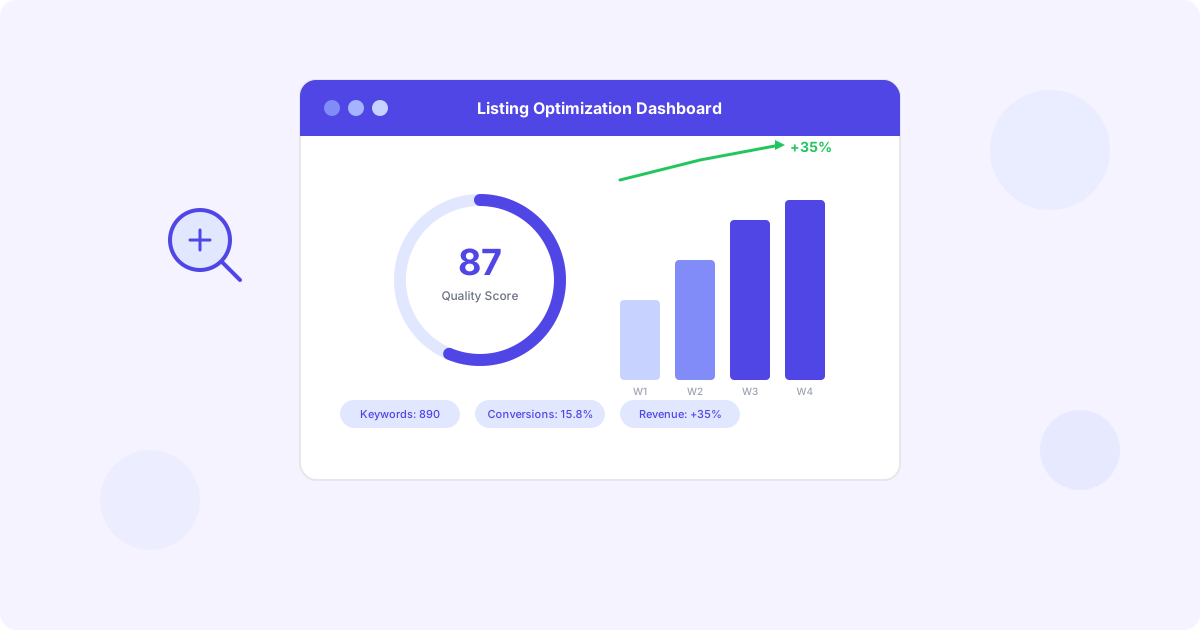
If you sell on Amazon, your listing quality directly impacts your sales. A well-optimized listing ranks higher in search results, converts more visitors into buyers, and ultimately drives more revenue. In this guide, we will walk you through the fundamentals of Amazon listing optimization.
Why Listing Optimization Matters
Amazon’s A10 algorithm determines which products appear in search results. While many factors influence ranking, your listing content is one of the few things entirely within your control. Optimized listings enjoy:
- Higher search visibility — Better keyword coverage means more shoppers find your product
- Improved conversion rates — Compelling content persuades visitors to buy
- Lower advertising costs — Organic rankings reduce your dependence on paid ads
- Better BSR (Best Seller Rank) — More sales drive your BSR higher, creating a virtuous cycle
The Four Pillars of Listing Quality
We break listing quality into four measurable dimensions:
1. Keyword Coverage
Your listing needs to contain the search terms your customers actually use. This goes beyond obvious keywords — it includes long-tail phrases, synonyms, and related terms that Amazon shoppers type into the search bar.
Best practices:
- Research keywords using reverse ASIN lookup on top competitors
- Include primary keywords in your title
- Distribute secondary keywords across bullet points and description
- Use all 249 bytes of backend search terms for additional coverage
- Avoid keyword stuffing — write naturally for humans first
2. Content Completeness
Amazon rewards listings that use all available content fields to their maximum potential. This means filling out your title (up to 200 characters), all five bullet points (up to 500 characters each), the description (up to 2,000 characters), and backend keywords.
Best practices:
- Use the full character limit for your title — include brand, key features, and primary keywords
- Write five distinct bullet points, each highlighting a different benefit or feature
- Use the description for storytelling, use cases, and additional keyword coverage
- Include product dimensions, materials, and compatibility information
3. Image Quality
While this guide focuses on text optimization, images play a crucial role in conversion. Amazon requires a white-background main image and allows up to 8 additional images.
Best practices:
- Main image: clean white background, product fills 85% of frame
- Lifestyle images: show the product in real-world use
- Infographics: highlight key features and dimensions
- Minimum 1,000 x 1,000 pixels for zoom functionality
4. Backend Optimization
Backend fields are invisible to shoppers but directly influence Amazon’s algorithm. These include search terms, subject matter, and other hidden attributes.
Best practices:
- Use all 249 bytes of backend search terms
- Include common misspellings and Spanish/alternate language terms
- Do not repeat words already in your visible listing content
- Fill in all applicable item attributes (color, size, material, etc.)
Getting Started with Peaklyst
Peaklyst automates the optimization process with AI:
- Connect your Amazon account using secure OAuth
- Import your listings — we automatically score each one
- Review AI-generated content optimized for your target keywords
- Push changes to Amazon with one click
- Track performance as your rankings and conversions improve
The AI understands Amazon’s ranking factors and generates content that balances keyword coverage with compelling, conversion-focused copy.
Measuring Success
After optimizing, track these key metrics:
- Quality Score — Our composite score across all four dimensions
- Organic Rankings — Positions for your target keywords
- Sessions — Number of shoppers viewing your listing
- Conversion Rate — Percentage of visitors who purchase
- Revenue — The ultimate measure of success
Most sellers see meaningful improvement within 2-4 weeks of optimization, with full impact typically realized within 60-90 days.
Next Steps
Ready to optimize your Amazon listings? Start your free trial or try our free Growth Plan Wizard to get an instant quality score for any ASIN.